


Identity drift
Login, user state, handoffs, and session policy become hard to reason about when each app invents its own entry point.
Support: [email protected]|Contact page
Six-app ecosystem overview
XFlowx connects six products into one operating layer for auth, billing, trust, audits, AI writing, media generation, and app-level visibility.
One ecosystem account includes Free access to all six apps. Upgrade one app, multiple apps, or a bundle when you need more limits and features.
Technical reviewers: see the engineering proof packet on the For Reviewers page.
The problem
Most products split auth, billing, audits, trust, AI workflows, deployment proof, and product operations across disconnected tools. XFlowx is designed to show how those surfaces can operate as one connected ecosystem.
Login, user state, handoffs, and session policy become hard to reason about when each app invents its own entry point.
Plan access, usage limits, checkout, and entitlement checks get dangerous when every product tries to own billing.
Audits, compliance signals, launch checks, AI outputs, and support activity lose value when they cannot be correlated.
The ecosystem map
XFlowx provides the operating layer. Verixet governs billing and access. Rataify makes trust visible. AudAiX audits launch quality. WordGeni creates verified writing. Crevux turns prompts and references into professional media workflows.

The control plane for app visibility, routing, signals, assistant surfaces, and ecosystem-level operations.
Owns
Connects to
Receives app signals, auth handoff context, readiness events, and support activity; sends operators the next action.

The billing, entitlement, governance, and verification authority for connected products.
Owns
Connects to
Receives checkout and usage context; sends allow/deny decisions, billing state, and audit-ready entitlement records.

The trust and verification layer for public proof, compliance surfaces, and issue evidence.
Owns
Connects to
Receives scan context and app routes; sends trust findings, proof states, public evidence, and customer-ready reports.

The audit and monitoring layer for Lighthouse, accessibility, UX checks, reports, and regression visibility.
Owns
Connects to
Receives URLs and launch targets; sends audit findings, monitoring signals, readiness warnings, and report summaries.

The writing intelligence layer for AI-assisted content, source grounding, publishing workflows, and exports.
Owns
Connects to
Receives briefs, sources, and verification context; sends checked drafts, citations, publishing output, and content handoff state.

The AI media studio for image, video, storyboard, and creative asset workflows.
Owns
Connects to
Receives prompts, references, and creative direction; sends generated assets, storyboards, media jobs, and export-ready creative work.
How the system works
The ecosystem is built around clear authority boundaries rather than every app recreating auth, billing, trust, and operational logic.
Sign up once through XFlow.
Get Free access to all six apps.
Upgrade only what you need.
Verixet manages billing, subscriptions, usage, entitlements, invoices, and the customer portal.
Satellite apps stay focused on their product workflows instead of becoming billing authorities.
XFlow keeps account, app routing, and ecosystem visibility in one place.
Free baseline and upgrades
The account model is simple for users: one ecosystem account, Free access across the suite, and paid upgrades when a specific app or bundle needs higher limits and features.
One ecosystem account includes Free access to all six apps by default.
A paid single-app plan upgrades only that selected app while the other apps remain on Free.
Bundles upgrade groups of apps together when higher limits and features make more sense than separate app upgrades.
Users can add another app upgrade or move into a bundle over time without creating a second ecosystem account.
Canceling paid access should not remove the Free baseline for the six-app ecosystem.
Billing, subscriptions, invoices, usage, entitlements, and customer portal actions live with Verixet.
Connected workflow examples
These are practical product examples, not technical implementation evidence. The deeper architecture details live on the reviewer page.
Use XFlow to manage ecosystem access, app routing, and visibility.
Use Verixet to manage billing, subscription state, usage, and access decisions.
Use Rataify to build trust, proof, reputation, and evidence surfaces.
Use AudAiX to audit and report on sites, UX, accessibility, and regressions.
Use WordGeni to create writing, content, source-grounded drafts, and exports.
Use Crevux to generate visual, media, storyboard, and creative assets.
Live product proof
These cards use existing repo assets and product previews where available. They are intentionally labeled as proof panels so the page does not imply fake customer screenshots or unsupported usage metrics.

XFlowx
Shows the operating-layer concept: connected app signals, readiness checks, and command-center visibility.

Verixet
Represents the billing, plan, usage, entitlement, and governance authority for protected product actions.

Rataify
Represents customer-facing trust reports, public proof surfaces, policy review, and issue evidence.

AudAiX
Represents launch-readiness audits, accessibility checks, UX findings, responsive testing, and report output.
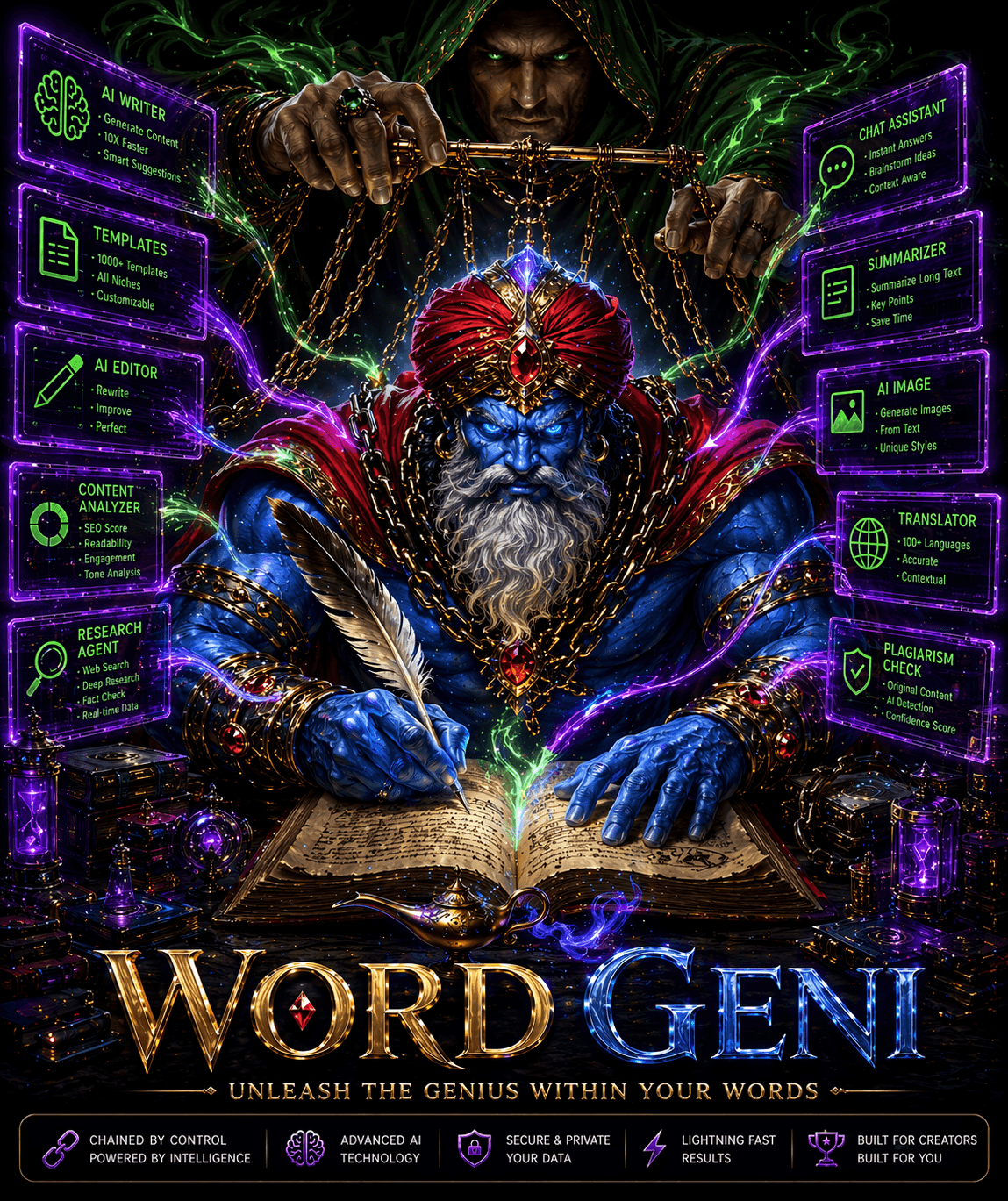
WordGeni
Represents source-grounded writing, claim review, content memory, publishing workflows, and export readiness.

Crevux
Represents prompt-to-asset workflows for images, video, storyboards, creative libraries, and media exports.
Builder
This ecosystem was designed and built as a full-stack product architecture project covering centralized auth, billing authority, cross-app routing, audit surfaces, AI-assisted workflows, and public product UX across six connected applications.
Looking for the technical proof?
For reviewers and senior engineers, the technical evidence page breaks down architecture, auth, billing, Supabase, deployment, testing, and security boundaries.
Explore For ReviewersWho this is for
The ecosystem page explains the product system. The reviewer page goes deeper into the engineering evidence.
A model for connecting auth, billing, proof, content, media, and operations without turning every app into a separate platform.
A public example of separating identity, billing authority, entitlement state, and operational visibility across products.
A product-friendly overview that points reviewers toward the deeper engineering evidence packet.
A clear map of what each app owns and how the six-product system fits together.